| | | Items per Page: 01 - 05 - 10 - 20 - 40 - 80 View: Orchid Index  |
| |
| | | Orchids Available for Purchase
Currently Viewing Orchids: 1 - 74 of 74
<< - Previous Page - Next Page - >> (80 Items per Page) | | B.S. = Blooming Size
N.B.S. = Near Blooming Size |
 | | | | | |
|
| |
| TOF4020 | | Amesiella philippinensis `Big Flower' x Amesiella monticola
| | |
| |

  
| | Amesiella Sparkling Jewel.
Remaking a really successful primary hybrid. Unbelievable displays of white Amesiella flowers are possible. Recommended. | |
|
| | | [ Top of Page ] | | |
| |
|
| |
| TOF3833 | | Amesiella philippinensis x sib 'Big Flower'
Philippines.
| | |
| |

 Gallery Gallery | | A really delightful small species with big flowers. Vandaceous,something like an Aerangis or small Angraecoid. Epiphyte on forested slopes on Luzon Island. Very thrilled to be able to produce this again, after not being available for a long time! | | | | 2" mounts / Small plants but NBS | $18.00 |
|
| | | [ Top of Page ] | | |
| |
|
| |
| TD281 | | Ancistrochilus rothschildianus 'Natural World'
West Africa..
| | |
| |
| | Very interesting tufted epiphyte has showy pink flowers with lilac-purple lips arising on erect stems from the base of the strange conical pseudobulbs. Leaves are deciduous but no special culture is required. "Plants are located with difficulty, for their onion-shaped pseudobulbs are always found nestling among mosses, fern, and liverworts covering the trunks and lower branches of heavily shaded forest trees." (Stewart, Orchids of Africa, 1981) Plants are perfect right now and will commence flowering later at the end of the summer or fall. Ours is a superior cultivar. Recently potted, showing new growths. | |
|
| | | [ Top of Page ] | | |
| |
|
| |
| TOF4081 | | Aspasia epidendroides `Natural World' x sib.
(A. fragrans)
Panama.
| | |
| |

Gallery | | Very unusual Oncidinae. Pretty, large flat pseudobulbs throw off short peduncles of 3 to 6 flowers. Coloring is really different; sepals greenish with bands of brownish lavender, petals are pale to dark lavender, and the lip is white with purple markings. Warm-growing. | |
|
| | | [ Top of Page ] | | |
| |
|
| |
| TD2 | | Bulbophyllum biflorum 'LIL' CBM/AOS.
(Cirrhopetalum biflorum.)
Sumatra to Philippines..
| | |
| |
| | Two good-size elongated flowers per stem. Pink-purple overall color. Good species - blooms frequently. Bulbophyllums in general are easy to grow under medium shade and should be watered regularly. There are thousands of species - most of them strange and bizarre. A never ending pool of good fun conversation pieces for the collector. | |
|
| | | [ Top of Page ] | | |
| |
|
| |
| TD4 | | Bulbophyllum breviscapum `Red Form'.
(Bulbophyllum lasiochillum.)
Burma, Thailand.
| | |
| |
| | There are two distinct forms of lasiochilum, this being the dark or "red" form. Large (for plant size) bizarre flowers are borne one per inflorescence. Dorsal dark purple, laterals yellow with crimson spot. Lip purple with long purple hairs. Limited. | | | | Small plants in 2.5" pot / N.B.S. | $8.00 |
|
| | | [ Top of Page ] | | |
| |
|
| |
| TD297 | | Bulbophyllum Emily Siegerist `A-Doribil 52'.
| | |
| |
| | (Bulbophyllum Elizabeth Ann x Bulb. lasiochilum) Produced by Suphachadiwong Nursery in Thailand in 1989. Clusters of large lasiochilum-looking flowers - much shorter than Elizabeth Ann but much longer than lasiochilum. Obviously the red form of lasiochilum was used since these cream-colored flowers have a lot of dark red spots and black-red dorsals. Small plants, large flowers. Easy, rewarding. | | | | 3.50" pot Two only / B.S. | $18.00 |
|
| | | [ Top of Page ] | | |
| |
|
| |
| TD107 | | Bulbophyllum fraudulentum.
New Guinea.
| | |
| |
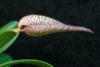
Gallery | | Sect. Hyalosema. Fabulous. Clumping plants have good-size reptilian flowers sticking up. Basic color is yellow-green, densely overlaid with pink tessellations. Quality Bulbophyllum produces many blooms at once on a well-grown plant. | | | | 2.00" mount Three only / B.S. | $16.00 |
|
| | | [ Top of Page ] | | |
| |
|
| |
| TD598 | | Bulbophyllum saltatorium v. albociliatorium
Africa..
| | |
| |
| | Variety of Dancing Bulbophyllum. Hairy lip with white to pink hairs. Recently potted. | |
|
| | | [ Top of Page ] | | |
| |
|
| |
| TOF3759 | | Cattleya bowringiana Imperialis 'Natural World' x self
Belize and Guatemala.
| | |
| |
| | The most northern-growing Cattleya species – growing sometimes epiphytically on trees, or frequently on rocks and cliffs in ravines. You may have caught that we are fond of this species, because it blooms at the time of our big County Fair Orchid Show in late September early October and is very showy. Imperialis, I think, just refers to the size of the plant – it is the largest variety in our collection. Heads of 15 to 25 three-inch lavender flowers if the plant is grown large. | |
|
| | | [ Top of Page ] | | |
| |
|
| |
| TOF4000 | | Cattleya bowringiana var. alba x self.
Guatemala, Belize.
| | |
| |
| | Rare form of the very showy bifoliate catt species. Tall sprays, many flowers. Very slight pink tint in throat (perhaps it is actually var. albescens). | | | | 2.00" pot | $12.00 | | | 3.50" pot One only | $18.00 |
|
| | | [ Top of Page ] | | |
| |
|
| |
| TOF3965 | | Cattleya dormaniana x sib.
Brazil..
| | |
| |
| | Small to medium size very interesting epiphyte. Thin, almost reed-like stems reach 12 or 15" tall. 3 inch flowers have olive-brown sepals and petals with distinctive lip, rose side lobes with purple veins and dark purple midlobe. Very different. | | | | 2.00" pot | $12.00 | | | 3.00" pot Two only / NBS | $22.00 |
New! |
| | | [ Top of Page ] | | |
| |
|
| |
| TOF3781 | | Cattleya jenmanii Coerulea 'Kathy's' AM/AOS x self
Venezuela.
| | |
| |
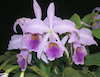
Gallery | | Each seedling from the original flask came out a little differently, though all beautiful and with the coerulea color. One of them, with large flowers and a particularly beautiful lip, received an Award of Merit of 85 points in Oct. 2017. I'm sure there will variation in the offspring of this selfing, but it is a heck of a good place to begin! I remind you that the story is; that only a single coerulea plant was ever found in nature. Don't forget the wonderful fragrance, the best of all the Cattleya species I think. | | | | 2.00" pot / Very limited | $13.00 |
|
| | | [ Top of Page ] | | |
| |
|
| |
| TOF3837 | | Cattleya lueddemanniana (Cecilia x Jose Palmieri) x sib.
Venezuela..
| | |
| |
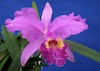
Gallery | | This should be good. Cecilia is a famous plant considered one of the best purple varieties. It has wide rich lavender petals and a darker lip accentuated by bright yellow side lobes. (Pictured on page 86 of `Monography of the Venezuelan Cattleyas') | |
|
| | | [ Top of Page ] | | |
| |
|
| |
| TD422 | | Chondrorhyncha caloglossa 'Natural World'
Costa Rica.
| | |
| |
| | Correctly Stenotyla picta. This is really a neat plant - one of my favorites within the fan-shaped leafy species. This flowers a lot and puts on a good show (flowers emerge and can be seen, they are not hiding in the foliage. (Good to hang it up or mount it, if possible - for good display). Moderate-size species - not gigantic like some. In this cultivar, the flowers are all-yellow. | |
|
| | | [ Top of Page ] | | |
| |
|
| |
| TD233 | | Cirrhopetalum curtisii "Purple Leaves'.
Borneo.
| | |
| |
| | This is something like Bulbophyllum corolliferum, but more interesting with its dark reddish foliage and better flowers. Red purple flowers arranged in an umbel. | | | | 3.00" net pot Four only / BS | $18.00 |
|
| | | [ Top of Page ] | | |
| |
|
| |
| TOF1567 | | Cischweinfia rostrata.
Costa Rica.
| | |
| |

Gallery | | This has many smaller flowers. Pleasing colors; green-yellow sepals and petals with beautiful pink lip. Nice presentation. These come from wet cloud forests (not that high up though) and we grow them fairly wet. Cute miniature! Recently potted | | SOLD OUT | | 2.00" pot / B.S.
| $17.00
|
|
| | | [ Top of Page ] | | |
| |
|
| |
| TOF1487 | | Cischweinfia sheehaniae.
(Cischweinfia pusilla.)
Colombia..
| | |
| |

Gallery | | Small clumping epiphyte produces showy displays throughout the year. Sepals and petals are red-brown with bright yellow tips. Lip is red-mahogany with contrasting white border. Very cute displays. | |
|
| | | [ Top of Page ] | | |
| |
|
| |
| TOF4062 | | Dendrobium aberrans.
Eastern Papua New Guinea.
| | |
| |
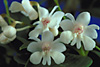
Gallery | | Still one of our most popular species. Mossy intermediate forests. Miniature clumping plants produce small sprays of 1/2" interestingly shaped white flowers, which last about three weeks. Old pseudobulbs keep sending out inflorescences for many years. Can flower anytime, with an emphasis on winter. On trees in the forests of the Maboro Range (Waria District). The species grows always in colonies…†(Schlecter 1914) Very cute - a winner. | |
|
| | | [ Top of Page ] | | |
| |
|
| |
| TOF3726 | | Dendrobium dearei `Taiwan' x sib. `Natural World'
Philippine Islands.
| | |
| |

Gallery | | Beautiful long-lasting floral displays. Tall semi-deciduous canes produce arching spikes from the uppermost nodes of both old and new canes. 6 - 18 showy 3-inch flowers are crystalline-white with a lime-green patch at base of lip. May bloom several times per year. Warm lowland epiphyte likes water all year. | | | | 2.00" pot / Limited | $11.00 |
|
| | | [ Top of Page ] | | |
| |
|
| |
| TOF3913 | | Dendrobium glomeratum `Shorty' x Dendrobium baeuerlenii`Natural World'
| | |
| |
| | | |
|
| | | [ Top of Page ] | | |
| |
|
| |
| TD335 | | Dendrobium lichenastrum v. prenticei.
Australia..
| | |
| |
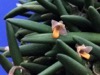
Gallery | | Queensland. "The Star Lichen-like Dendrobium" Miniature clumping epiphyte is hot to cool growing. Attractive plants with succulent leaves have small upside-down flowers which are cream with nice red striping and orange lip. | | | | 2.00" mount / B.S. | $20.00 | | | Larger plants on larger mounts / One only | $27.00 |
|
| | | [ Top of Page ] | | |
| |
|
| |
| TD265 | | Dendrobium reflexitepalum `Natural World'
Borneo. .
| | |
| |
| | Hot-growing epiphyte with many triangular flattened leaves. Short inflorescences have several small flowers, very attractive rose-pink coloration in this special cultivar. If plants are grown with stronger light, the foliage takes on a reddish color (we've grown them both shady and bright). | | SOLD OUT | | 2.00" net pot Very limited / B.S.
| $11.00
|
|
| | | [ Top of Page ] | | |
| |
|
| |
| TD370 | | Dendrobium toressae.
Northern Queensland, Australia..
| | |
| |
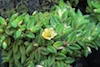
Gallery | | Miniature dense clumping epiphyte has small yellow flowers. Unbelievable plant with very crisp foliage. Cute clumps covering tree-fern or bark mounts. | | | | 2.00" mount / B.S. | $25.00 | | | 3.00" mount / B.S. | $35.00 |
|
| | | [ Top of Page ] | | |
| |
|
| |
| TOF4030 | | Dendrochilum magnum `Botanical Garden'
Philippines.
| | |
| |

Gallery | | Amazing hanging, spiraling spikes of many large (for Dendrochilum) yellow flowers. Easy-growing plants make nice "specimens". This will be a large species. Showy displays. | | | | 2.00" pot Five only / N.B.S. | $14.00 |
|
| | | [ Top of Page ] | | |
| |
|
| |
| TD414 | | Dendrochilum tenellum
Philippines..
| | |
| |
| | Bushy plants with very narrow grass-like leaves have numerous semi-arching wire-like spikes carrying up to 30 tiny cream colored flowers. Very distinct from other Dendrochilums. Nice. | | | | 3.00" pot Two only / B.S. | $19.00 |
|
| | | [ Top of Page ] | | |
| |
|
| |
| TD412 | | Dendrochilum wenzelii `Yellow'
Philippines..
| | |
| |
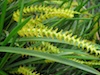
Gallery | | Beautiful `toothbrush' panicles of dense small yellow flowers on long spikes make amazing specimen plants. Rare form of the normally red species. Nice blooming size clumps. Limited. | | | | 3.00" pot Two only / B.S. | $20.00 |
|
| | | [ Top of Page ] | | |
| |
|
| |
| TD408 | | Dendrochilum wenzelii.
Philippines..
| | |
| |

Gallery | | Clumpy plant has very slender long grass-like leaves and spiraling chains of red flowers. Makes nice specimens. Blooms around Christmas. | | | | 3.00" pot Two only / B.S. | $21.00 |
|
| | | [ Top of Page ] | | |
| |
|
| |
| TD120 | | Dracula lotax
Colombia.
| | |
| |
| | Warm tolerant. Small plants have cute fuzzy (hirsute) white flowers with some dark markings and long tails.
Recently re-potted | | | | 2.00" pot Three only / B.S. | $17.00 |
|
| | | [ Top of Page ] | | |
| |
|
| |
| TOF4092 | | Dyakia hendersoniana x sib.
Borneo.
| | |
| |
| | ('Alexis' x 'Natural World') One of the cutest and showiest. Miniature warm-growing epiphyte,easy to grow. Brilliant hot-pink, long-sasting flowers. When in bloom, this is the most eye-catching plant in our nursery!
Previously known as Ascocentrum hendersonianum. ’Alexis’ photo
Here are the small plants(actually blooming size) that we are currently selling Plant size photo
| |
New! |
| | | [ Top of Page ] | | |
| |
|
| |
| TOF3949 | | Encyclia parkeri `Natural World' CHM/AOS x self
Colombia..
| | |
| |
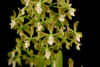
Gallery | | Newly-described species has been dedicated to our own Jeffrey Parker. Award is for horticultural merit. It is showy with dense branched sprays of numerous blossoms on erect multiflowered panicles. The green and gold flowers are a little larger than 1" across. Obviously we are excited to have this.
| |
|
| | | [ Top of Page ] | | |
| |
|
| |
| TD14 | | Encyclia polybulbon.
Cuba to Honduras..
| | |
| |
| | Neat semi-miniature creeping plants quickly form dense mats. Large (for plant) flowers are held above the plant. Pretty... yellow and orangey-brown with white lip. | | | | 2.00" net pot four only / B.S. | $14.00 |
|
| | | [ Top of Page ] | | |
| |
|
| |
| TD514 | | Epidendrum peperomia `Natural World', AM/AOS.
Colombia.
| | |
| |

Gallery | | Our special awarded plant. Dwarf epiphytic herb forms large dense mats of clustered stems with attractive succulent foliage. The 1 1/2" glossy flowers can bloom at any time. Ours is not red and does not look like Epi. porpax, rather a pleasing green with a light pinkish suffusion. High award is worth your consideration. Very limited | | | | 3.00" mounts One only / B.S. | $28.00 |
|
| | | [ Top of Page ] | | |
| |
|
| |
| TD111 | | Epidendrum porpax.
Mexico to Panama, Venezuela and Peru.
| | |
| |
| | (Syn: Epidendrum pepperomia) I relate to the pepperomia name because Hawaii has many native pepperomia species, and their habit does remind me of this orchid. Small clumping, sprawling plants have large (for plant) glossy flowers. Prominent lip is red or reddish in color, green sepals, petals and column. | | | | 2.00" pot One only / B.S. | $15.00 |
|
| | | [ Top of Page ] | | |
| |
|
| |
| TD93 | | Eria convallarioides.
(E. spicata)
Burma.
| | |
| |
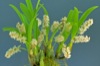
Gallery | | (Syn: E. spicata. See Orchids - A Golden Guide). Erect foxtails of many closely spaced pinkish-white flowers. | |
|
| | | [ Top of Page ] | | |
| |
|
| |
| TD138 | | Lepanthopsis astrophora 'Stalky'.
Venezuela.
| | |
| |

Gallery | | One of my favorite pleuro's. Many spikes shoot out of miniature clumpy plants. Tiny star-shaped flowers are a beautiful clear wine-purple color. Easily grow it into a specimen - really nice. | | | | 2.00" mount One only / Bushy plants B.S. | $22.00 |
a T.O.F. favorite! |
| | | [ Top of Page ] | | |
| |
|
| |
| TOF1003 | | Leptotes bicolor.
Brazil.
| | |
| |
| | Coastal mountains down to 1500 ft. Related to Cattleyas and Laelias. Small plants (3" tall) have cylindrical bulbs and more or less terete leaves. 1-3 flowers on short spikes emerge from apex of pseudobulb. Flowers are about two inches across, and are white with magenta-rose lip. The seed capsules were once used to flavor ice cream. Moderate shade. | | | | 2.00" net pot Two only / B.S. | $17.00 |
|
| | | [ Top of Page ] | | |
| |
|
| |
| TOF3998 | | Lockhartia parthenocomos
Colombia, Ecuador, Peru.
| | |
| |
| | Very cute epiphytic species with braided leaves with pretty yellow flowers, which have some red markings in the center. Easy to grow, plants start to bloom at a small size. Good-lasting displays. The genus of around 30 species is still "poorly understood" | |
|
| | | [ Top of Page ] | | |
| |
|
| |
| TOF2942 | | Maxillaria endresii x sib.
Panama..
| | |
| |
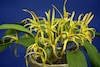
Gallery | | Showy, warm-growing. Numerous large (3 inch) bright yellow spidery flowers singly on erect spikes have red in center of flower. | | | | 3.50" pot One only / B.S. | $32.00 |
|
| | | [ Top of Page ] | | |
| |
|
| |
| TD207 | | Maxillaria friedrichsthalii.
Mexico to Peru.
| | |
| |
| | Cute small clumping plants bloom with numerous light yellow flowers. | |
|
| | | [ Top of Page ] | | |
| |
|
| |
| TD420 | | Maxillaria gracilis
Brazil..
| | |
| |
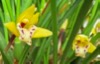
Gallery | | A hard-to-find small-sized Brazilian. Easy to grow, with narrow leaves and numerous cute cheery flowers held amid the foliage. Fragrant. Rare opportunity. | | | | 2.00" pot One only / B.S. | $16.00 |
|
| | | [ Top of Page ] | | |
| |
|
| |
| TD358 | | Maxillaria oreocharis
Nicaragua, Costa Rica, Panama..
| | |
| |
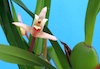
Gallery | | Attractive medium-size plants with flattened roundish pseudobulb. The 2" flowers have light pink sepals, the petals are white and the basal half of the white lip is nice red. They are borne singly on erect 4" inflorescences.
Recently re-potted | | | | 2.00" net pot / B.S. | $18.00 |
|
| | | [ Top of Page ] | | |
| |
|
| |
| TD419 | | Maxillaria richii.
Ecuador..
| | |
| |
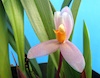
Gallery | | Smallish medium-size epiphyte can be grown both hot or cool. Clumpy plants have attractive Martian-looking flowers held on short vertically erect spikes originating from the bases of the pseudobulbs. Attractive 1.5" pink flowers have orange lips. Cute species doesn't get large. | |
|
| | | [ Top of Page ] | | |
| |
|
| |
| TD546 | | Maxillaria sanguinea
Panama.
| | |
| |

Gallery | | Medium-size warm-growing epiphyte. Very interesting narrow semi-terete leaves on plump tapered pseudobulbs, gives it a grassy appearance. Attractive bloomings of several-to-many 3/4" flowers. Slightly fragrant.
Recently repotted | | | | 2.00" pot One only / B.S. | $18.00 |
|
| | | [ Top of Page ] | | |
| |
|
| |
| TD558 | | Maxillaria schunkeana
(Brasiliorchis schunkeana)
Brasil..
| | |
| |
| | Cute, bushy plants produce dark, almost black, long lasting flowers around the base of plant. | | | | 2.00"pot / Blooming size | $18.00 |
|
| | | [ Top of Page ] | | |
| |
|
| |
| TOF2465 | | Maxillaria uncata 'Lineas Rojas'.
Costa Rica.
| | |
| |
| | Small miniature epiphyte has a nice habit clumping with narrow spiky leaves. Numerous small (1/2") flowers peak out from the foliage. Cream with the lineas rojas "red stripes". Cute, easy. | |
|
| | | [ Top of Page ] | | |
| |
|
| |
| TD385 | | Maxillaria variabilis var. unipunctata `TOF's Aibonito'
((Previously sold as Max. costaricensis `Different'))
Costa Rica..
| | |
| |

Gallery | | Really sweet small-sized clumping epiphyte has numerous small deep yellow flowers covered with a reddish suffusion. Fragrant. | |
|
| | | [ Top of Page ] | | |
| |
|
| |
| TOF3725 | | Neofinetia falcata `Pink' x self
| | |
| |
| | | |
|
| | | [ Top of Page ] | | |
| |
|
| |
| TOF3745 | | Neofinetia falcata.
Japan, Korea..
| | |
| |
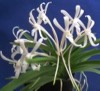
Gallery | | In Japan this species is known as the `fu-ran' plant and was considered sacred by the Samurai class." Vandaceous - small clumping fan-shaped epiphytes have heads of beautiful pure white flowers with long nectary spurs hanging down from each. Nice fragrance. | |
|
| | | [ Top of Page ] | | |
| |
|
| |
| TOF3862 | | Phalaenopsis lobbii 'Natural World' x self
Eastern India, Bhutan.
| | |
| |

Gallery | | Cute dwarf epiphyte on rough bark evergreen trees in lowland forest. Several pretty, sequentially-opening, 1” flowers are white, with yellow lip marked with orangey bars. Semi-deciduous. Rewarding species, one of my faves. Limited.
| | | | 2" mtd. One only / B.S. very limited. | $17.00 |
|
| | | [ Top of Page ] | | |
| |
|
| |
| TD114 | | Platystele reflexa.
Ecuador.
| | |
| |

Gallery | | One of my favorite pleurothallids. A cloud forest small epiphyte with many nice successively blooming bright orange flowers. Grows well here so it's not that cool-growing. Photo courtesy Tomas Bajza (Please note; all photos on this site are of T.O.F. plants) | | | | 2.00" pot One only / B.S. | $17.00 |
|
| | | [ Top of Page ] | | |
| |
|
| |
| TD44 | | Platystele stenostachya.
Central America.
| | |
| |
| | Good-growing miniature species has a multitude of very tiny yellow flowers with dark yellow lips. Racemes flower successively so plants are very often in bloom. | | | | 1.00" pot One only / B.S. | $14.00 |
|
| | | [ Top of Page ] | | |
| |
|
| |
| TD29 | | Pleurothallis allenii.
Panama.
| | |
| |

Gallery | | Very showy for a small species. Long, deep maroon flowers appear around and throughout clumpy plants. Easy, warm-growing. Blooms often throughout the year. Recently re-potted. | | | | 2.00" pot Two only / B.S. | $16.00 |
|
| | | [ Top of Page ] | | |
| |
|
| |
| TD76 | | Pleurothallis corniculata.
Panama.
| | |
| |
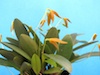
Gallery | | Very cute displays on small plants. Many single yellow-orange flowers lightly striped towards throat. Hood-like dorsal sepals give an overall appearance of 'bird beaks'. | | | | 2.00" Mounts / B.S. | $18.00 |
|
| | | [ Top of Page ] | | |
| |
|
| |
| TD318 | | Pleurothallis costaricensis.
Costa Rica, Panama..
| | |
| |
| | 4"tall plants have ascending growths. Several sprays are greater in height than the plant and have around 15 small ¼" nice yellow flowers with faint red area on synsepal, all offset by a red lip. Nice. | | | | 2.00" pot Three only / B.S. | $18.00 |
|
| | | [ Top of Page ] | | |
| |
|
| |
| TD407 | | Pleurothallis leptotifolia
Brazil.
| | |
| |
| | (Acianthera leptotifolia). A really neat miniature warm-to-cool growing epiphyte with succulent leaves and yellow flowers. `Imagine a tiny Leptotes with a creeping rhizome, leaves reduced to under three-quarters of an inch long, and very slender scapes, twice as high as the leaves, bearing two or three Pleurothallis-like flowers, a quarter of an inch long, and you have this curious little species, which has just been flowered by Mr. H.A. Tracy, at Twickenham'(Orchid Review, Vol. XVI, 1908) | | | | 2.00" Recently mounted / B.S. | $16.00 |
|
| | | [ Top of Page ] | | |
| |
|
| |
| TD59 | | Pleurothallis luctuosa.
Central America through Colombia and Ecuador.
| | |
| |

Gallery | | Lowland tropical rainforest (warm growing). Clumpy plants produce wiry spikes with several maroon flowers. Very nice, worthwhile. | | | | 2.00" pot Two only / B.S. | $19.00 |
|
| | | [ Top of Page ] | | |
| |
|
| |
| TOF1179 | | Pleurothallis sonderiana.
Brazil.
| | |
| |
| | Small (2.5" tall), clumping, spiky-looking plants with many short spikes of golden yellow to orangey bract-like flowers which last fairly well. Easy pleurothallid to "get acquainted" with. | | | | 2.00" mounts / B.S. | $18.00 |
|
| | | [ Top of Page ] | | |
| |
|
| |
| TD307 | | Pleurothallis sp. #5.
((Pleurothallis sanchoi))
Mexico..
| | |
| |
| | Very cute small species to 4" tall with wiry leaf stems. Flowers at base of leaf are golden with a reddish suffusion offset by a wine-red lip. Interestingly, this plant has been identified by Selby as Pl. circumplexa (O.I.C. # 13938), but they did state that this plant is NOT typical. We are not using that name because this plant and flowers do not remotely resemble the photos of Pl. circumplexa on the Internet or in books such as "˜Field Guide to the Orchids of Costa Rica and Panama" (Dressler) | |
|
| | | [ Top of Page ] | | |
| |
|
| |
| TD80 | | Restrepia brachypus 'Orange'.
Colombia.
| | |
| |
| | Good species has fairly large flowers - orange in this select variety. The showy synsepal always has 13 stripes in R. brachypus. Rather uncommon but easy, rewarding. | | | | 2.00" pot One only / B.S. | $17.00 |
|
| | | [ Top of Page ] | | |
| |
|
| |
| TD34 | | Restrepia elegans x dodsonii.
| | |
| |
| | A Colombian crossed with an Ecuadorian. Hybrid vigor. Nice flowers are copper colored covered by fine red spots. Large flower for our Restrepias. Very limited. | | | | 2.00" pot One only / B.S. | $16.00 |
|
| | | [ Top of Page ] | | |
| |
|
| |
| TD1 | | Restrepia striata.
Ecuador.
| | |
| |

Gallery | | Super easy and warm-tolerant. Blooms often. Good introduction to the world of pleurothallids. Single flowers emerge from leaf petiole and are striped all over with red-brown. | | | | 2.00" pot Two only / B.S. | $11.00 |
Can't go wrong! |
| | | [ Top of Page ] | | |
| |
|
| |
| TD310 | | Scaphosepalum cimex.
Ecuador..
| | |
| |
| | Minature-sized warm-growing epiphyte. The `Bug-like Scaphosepalum' refers to the shape of the flowers. Blooms in the winter on a slender 5" long, successively several-flowered inflorescence. Recently re-potted. Good species! | |
|
| | | [ Top of Page ] | | |
| |
|
| |
| TD125 | | Scaphosepalum fimbriatum.
Colombia.
| | |
| |

Gallery | | Bizarre yellowish flowers with red markings have bristly hair on outside. Flowers on thin wire-like stems, remind me of some little creature sticking up. Clumpy pleurothallid. This is a real conversation piece. Almost always in bloom. | |
Recommended. |
| | | [ Top of Page ] | | |
| |
|
| |
| TD90 | | Scaphosepalum microdactylum.
Panama.
| | |
| |
| | 2" spikes have 4 or 5 hooded flowers opening successively. Light yellow, striped red. Lip red-purple. | |
|
| | | [ Top of Page ] | | |
| |
|
| |
| TD314 | | Scaphosepalum ovulare.
Ecuador..
| | |
| |

Gallery | | "The Egg-Like" Scaphosepalum. Miniature plants with short ascending and descending successively-flowered wiry spikes. Flowers are less than a quarter inch, egg-shaped, and are yellowish with red spots and blotches. Recently mounted. | | | | 2.00" mount Two only / B.S. | $19.00 |
|
| | | [ Top of Page ] | | |
| |
|
| |
| TD70 | | Scaphosepalum rapax.
Colombia..
| | |
| |

Gallery | | Sweet little 1" tall plants are very clumpy. Many pendant wiry spikes have small maroon spotted flowers borne singly. Gaping flowers have 2 fang-like sepaline tails. True miniature. Cute little bushy plants. Recently mounted. Almost always in bloom. Limited. | |
|
| | | [ Top of Page ] | | |
| |
|
| |
| TD152 | | Scaphosepalum rinkei.
Venezuela..
| | |
| |
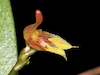
Gallery | | Miniature clumping epiphyte has wire-like spikes which hold the single flowers out away from the plant (successively many flowered). Tiny 3/8" flowers are yellowish with an elongated red lip. This has just been described as a new species by Carlyle Luer. Most Scaphosepalum species have proven easy to grow in our intermediate climate and quite rewarding. | |
|
| | | [ Top of Page ] | | |
| |
|
| |
| TOF3827 | | Schombocattleya Louise Fuchs `Weesie' x self
| | |
| |

Gallery | | (Schomburgkia tibicinis x Cattleya bicolor) Very nice showy hybrid! 3 - 6 large red waxy flowers with undulated petals and sepals. Flowers are held at tops of spikes as in Schomburgkia but much shorter therefore more manageable. We heard that one of our seedlings from a previous selfing received an FCC/AOS in San Diego. | |
|
| | | [ Top of Page ] | | |
| |
|
| |
| TOF3988 | | Sophronitella violacea.
Brazil.
| | |
| |
| | Warm to intermediate epiphyte in the humid forests of Eastern Brazil. Really cute miniature has large (for the plant) one or two bright violet flowers on each 2" erect spike. Very beautiful. Very small but NBS plants 2.00" to 2.50" mtd bark. VERY LIMITED!! | |
|
| | | [ Top of Page ] | | |
| |
|
| |
| TD391 | | Spathoglottis lobbii (syn. affinis)
New Guinea..
| | |
| |

Gallery | | Rare offering! Great species does have a deciduous habit, but this is not a problem. It is very easy to grow and maintain. Small in stature with thin erect pikes of several and many beautiful 1" round, bright yellow flowers. This is nothing like S. kimballiana or S. gracilis, so please don't be confused. This is really nice. | | | | 2.00 pot One only / N.B.S. | $11.00 |
|
| | | [ Top of Page ] | | |
| |
|
| |
| TD434 | | Tolumnia sylvestris `Natural World' CCE/AOS
Hispanola and Cuba..
| | |
| |
| | This is a division of our CCE/AOS plant which received Best In Show and the Governor's Trophy at our big County Fair Show a few years back. It had 1400 flowers at that time!. The pink color is pale, the value of this cultivar is really in the floriferousness and ease of culture. T. sylvestris carries more flowers per spike than other similar species. These low-elevation species grow dry and bright in bushes, grass, and on dead trees and cactus. For this reason we grow them hanging in empty net pots. The CCE plant hadn't been touched n 15 years and was basically growing in mid-air. | |
|
| | | [ Top of Page ] | | |
| |
|
| |
| TOF3687 | | Trichoglottis brachiata x sib. `Vin Mar' AM/AOS
(Trichoglottis atropurpurea)
Philippines.
| | |
| |

Gallery | | Still really great addition to any collection. I remember the County Fair Orchid Show here in the old days. We had a permanent display house at the old Fair Grounds. It was the favorite destination at the fair, and many dignitaries came through. I love the historical photo of President Richard Nixon enjoying the displays. I digress, the displays were put up by individuals not like today, where the show is a group display. Most of the exhibitors grew the Trichoglottis into tall specimens, which they placed close together as a backdrop for the shorter plants in front. They had 3 different color variants as I recall but those are long gone now. Here we crossed the stunning "˜Vin Mar" AM/AOS with one of ours from the old days.
Attractive tall upright climbing monopodial vandaceous epiphyte with interesting narrow width has showy red-maroon flowers up and down the stem, emerging from the leaf axils. Fragrant. | | | | 2.00" pot Five only | $10.00 |
|
| | | [ Top of Page ] | | |
| |
|
| |
| TD186 | | Zootrophion atropurpurea.
Brazil.
| | |
| |
| | (Specklinia atropurpurea). Name refers to dark purple color. Easy to grow warm to intermediate pleurothallid has interesting flowers which don't fully open - like the other Zootrophions. Interesting species for sure. | |
|
| | | [ Top of Page ] | | |
| |
|
| |
| | | Currently Viewing Orchids: 1 - 74 of 74
<< - Previous Page - Next Page - >> (80 Items per Page) |

 (cart empty)


